By Cass Hanson, Development Director
As a lifelong Madison resident, the thing that defined my childhood was my neighborhood. I grew up in a small nook near Olin Park, on the south side. It was a close-knit and diverse neighborhood full of mixed-aged kids.

We swam, we biked, we played outside all day, every day. On repeat all the way through to our teenage years. Being neighbors was a powerful thing. We knew each other, we relied on each other, and we navigated challenges together. There were so many good times, alongside a few difficult ones. There were heartbreaks and troubled moments, and a continued unfolding of families growing, evolving, thriving, and finding joy.
Sunsets, Barbie dolls (yes, we all played with Barbies!), four square, and did I mention bikes? My most potent childhood memories are of other kids: teenagers starting to drive, babies being born, which one of us could tie their shoes first, who was allowed to eat candy for dinner, who had to go inside before dark. Adults? They were there in the periphery, always nearby, but kids ruled. They were there, watching, laughing, rolling their eyes, probably grateful that our troop was otherwise occupied most of the time. And I know they weren’t worried about screens, online predators, or AI.
Now, as an adult living in a neighborhood, what I described above is the gold standard: kids playing freely and safely in multi-aged groups, parents and other adults watching from afar, and the feeling of safety and trust to reach out in a bind or share what you have without being asked. I am lucky to live on a street similar to the one I grew up on – a street where the front stoop is where most folks spend their time, kids ride bikes on the sidewalks, and neighbors share garden starters and toys no longer used.
While I’m fortunate, not every neighborhood enjoys the same strong support system. It’s natural for a neighborhood with houses and more economic stability to have longer-lasting relationships, as people move less often. But at the same time, neighborhoods designed with large backyards and high fences often struggle to foster the same level of connection as those with dwellings closer together. It’s rare these days to find a neighborhood that truly gets it right – a balance of stability and close proximity to neighbors. And we live in a different time now where parents tend to trust inside more than outside. Kids with working parents may be allowed to stay at home alone but not allowed to go out. This shift, coupled with the demands on working parents, means fewer kids are playing freely outdoors.
These personal experiences underscore a fundamental truth: neighborhoods are important. Healthy neighborhoods and a well-built environment are recognized as one of the Social Determinants of Health. While factors like access to public transportation and safe sidewalks play a crucial role, the sense of belonging and interpersonal safety is an equally important piece of the puzzle for a truly thriving neighborhood.
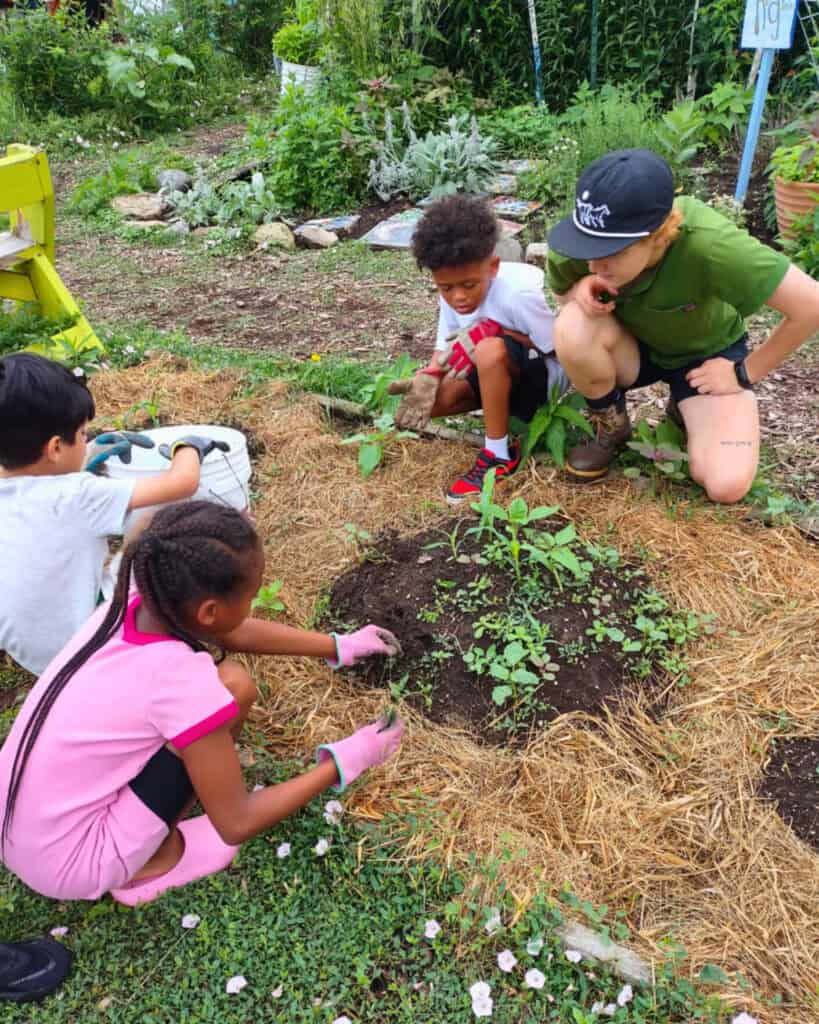
That is why I am so proud to work alongside the folks here at Rooted, who are running the Badger Rock Neighborhood Center and building community one person at a time. What I witness at Badger Rock is people feeling seen, safe, and connected. Folks have a place to come learn, gather, and eat. It’s a place to see old friends and make new ones. A place where people are included, no matter what language they speak or the color of their skin. People of all ages are welcomed and encouraged not only to attend but to lead workshops, share their gifts, and bring their ideas to the community.
So, as we head into August, the sweetest month of summer, can you give a little love to your neighborhood or local community center?
Here are a few simple ways to start:
- Sit on your front stoop instead of your backyard.
- Knock on someone’s door to ask a question or just say hi.
- Offer up a useful hand-me-down.
- Share freshly grown produce.
- Share your talents.
- Attend a neighborhood meeting.
- Spread the word about a community event, and show up yourself!
What does a thriving neighborhood mean to you? How do you foster connection on your street or at your local community center? I would love to hear from you! [email protected]